

Summer Road Trip Ready: Essential Car Checks for Washington Adventures
Washington Summer Road Trip Car Checks
A safer summer trip starts before you leave the driveway.
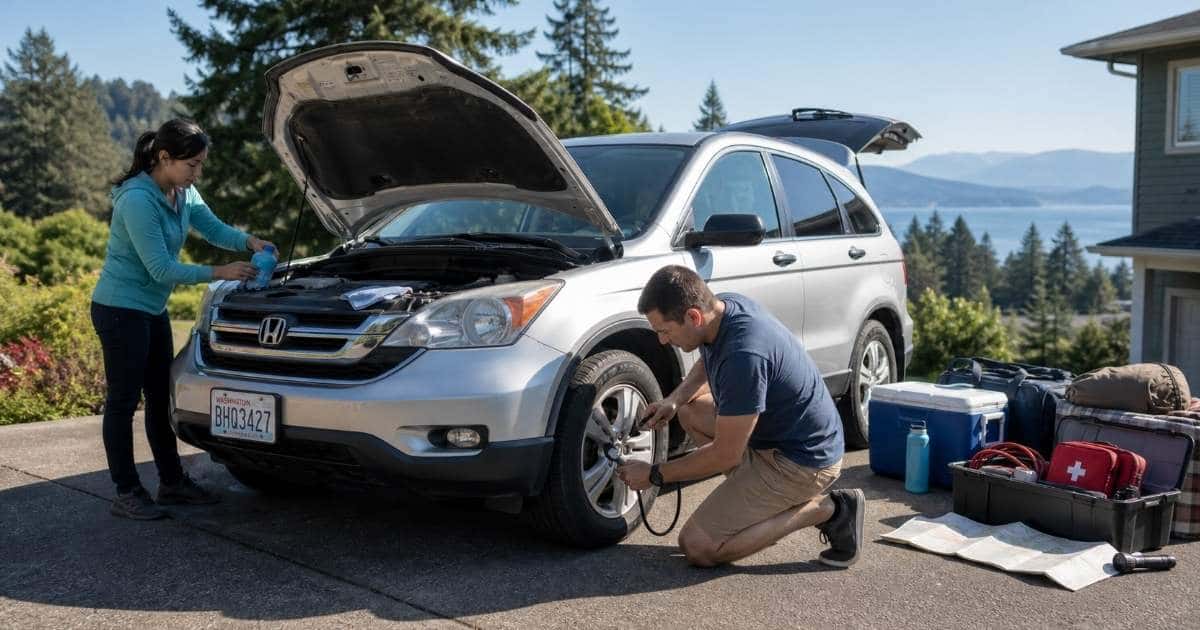
This guide covers tires, brakes, fluids, battery health, visibility, emergency gear, and route planning for Washington adventures.
Why Washington Summer Road Trips Put Your Car to the Test
Washington’s geography is varied, and that variety is what makes it such an interesting road trip destination. A single day of driving can take you through alpine terrain in the morning, foggy coastline by afternoon, and high desert country before dinner. Each environment creates different stress on your tires, brakes, engine, and electrical systems.
Summer also brings heavier traffic to popular routes near the Olympic Peninsula, Mount Rainier, and the San Juan Islands. More stop-and-go driving means more strain on your cooling system and brakes. Add in the possibility of wildfire smoke reducing visibility or forcing detours, and a thorough pre-road-trip car check stops being cautious thinking and starts being just practical.
Tires and Brakes: The Safety Checks That Come First
Your tires are the only part of your car touching the road, so they top any reasonable vehicle checklist. Brakes follow closely behind, especially if you’re planning to drive mountain passes or descend into river valleys on winding two-lane roads.
Tire Pressure, Tread Depth, and Spare Readiness
Start with tire pressure. Both underinflated and overinflated tires affect handling and fuel efficiency. Check PSI when tires are cold and match the number on the sticker inside your driver’s side door, not the maximum PSI printed on the tire sidewall.
Tread depth matters just as much. Washington roads, even in summer, can be wet or slick in coastal and forested areas. Use the penny/quarter tread test as a quick field check: insert a quarter into the tread groove with Washington’s head pointing down. If you can see the top of his head, tread is getting low. Insert a penny the same way: if you can see Lincoln’s entire head, the tread is worn past 2/32″, which is the NHTSA-aligned replacement threshold. At that point, the tires need replacing before your trip.
Don’t skip the spare. Pull it out, check its pressure, and confirm you have a working jack and lug wrench. A flat spare isn’t useful on a remote mountain road with no cell signal.
Brake Inspection Before Mountain Descents
Washington’s mountain passes, including Snoqualmie Pass, White Pass, and the North Cascades Highway, involve long, steep descents where effective braking is critical. If your brakes squeal, grind, or feel spongy when you press the pedal, address it before your trip. Those symptoms point to worn pads, low fluid, or rotor problems that become dangerous on a mountain grade.
DIY vs. Professional Pre-Trip Inspection
| Check Type | DIY Difficulty | Tools Needed | Risk If Skipped | Recommended Action |
|---|---|---|---|---|
| Tire pressure | Easy | Tire gauge | Poor handling, blowout | Check cold PSI before every trip |
| Tread depth | Easy | Quarter or penny | Loss of grip on wet roads | Replace at or below 2/32″ |
| Brake pad thickness | Moderate | Flashlight | Brake failure on descents | Have a mechanic inspect if unsure |
| Battery load test | Hard | Load tester | Stranded start failure | Take to a shop if battery is 3 years old or older; test annually once past year three |
| Fluid levels | Easy | None | Engine damage, poor visibility | Top off before departure |
| Coolant system | Moderate | Flashlight | Overheating on climbs | Check reservoir level; inspect for leaks |
Thinking About a More Dependable Summer Vehicle?
If your current vehicle is giving you doubts before the trip starts, CarHop of Tacoma can help you compare used vehicles and flexible financing options.
Under the Hood: Essential Fluids and Battery Health
Engine Oil, Coolant, and Key Fluid Levels
Check your engine oil first. If it’s low or looks dark and gritty on the dipstick, change it before you leave. Fresh oil is especially important in summer when engine temperatures run higher.
Coolant is next. An overheated engine on a steep highway climb can leave you stranded and cause expensive damage. Make sure the coolant reservoir sits at or above the minimum line. If the level keeps dropping, that could signal a leak worth investigating before the trip.
Also verify brake fluid, power steering fluid, and windshield washer fluid. These quick checks take only a few minutes but make a real difference in performance. Washer fluid tends to get ignored until someone needs it on a dusty highway or after a bug-covered stretch.
Battery Condition in Summer Heat
Most people associate battery problems with cold weather, but heat accelerates battery fluid evaporation and degrades internal components. If your battery is more than three years old, have it load-tested annually and before your trip. Also check terminal connections for white or greenish corrosion and clean them if needed. Finding a weak battery in your own driveway is far better than finding it at a trailhead two hours from the nearest town.
If your car has been showing signs of electrical trouble or you’re worried about reliability on a long Tacoma road trip, it may be time to consider an upgrade. See our fast approval options and get into something dependable before summer kicks into gear.
Lights, Wipers, and Cooling for Pacific Northwest Driving
Visibility Checks for Coastal Fog and Mountain Weather
Walk around your car and test every light: headlights on low and high beam, taillights, brake lights, reverse lights, and turn signals. A burned-out bulb can result in a traffic stop, and more importantly, it makes you less visible in coastal fog or mountain mist.
Wiper blades that streak or skip should be replaced before you leave. Washington’s coastal routes can bring sudden morning fog, and driving through mist with ineffective wipers quickly becomes unsafe. Top off washer fluid while you’re at it.
Air Conditioning Performance on Long Washington Highways
Summer driving through eastern Washington or the Columbia River Gorge can get genuinely hot. If your AC blows warm air, makes unusual noises, or takes a long time to cool the cabin, have it checked before you leave. Comfortable passengers mean a less distracted driver, which matters on a four-hour summer highway stretch.
Building a Washington-Ready Emergency Kit
Core Safety Gear and Roadside Tools
- ✓ Jumper cables or a portable jump starter
- ✓ Flashlight with fresh batteries
- ✓ Basic tool kit
- ✓ Reflective triangles or road flares
- ✓ First aid kit
- ✓ Tire pressure gauge
- ✓ At least one gallon of water per person
- ✓ Non-perishable snacks
Know how to use what you’ve packed. Locate your jack and spare before you leave, and confirm you know the jack points on your vehicle.
Wildfire, Mountain Pass, and Remote Route Additions
Washington’s wildfire season regularly affects eastern Washington and parts of the Cascades, and smoke can reduce visibility or close routes with little warning. Pack N95 masks in the glove compartment. For mountain passes and remote stretches, add:
- ✓ Emergency blanket and extra layers
- ✓ Paper map of your driving region (GPS drops out in valleys and gorges)
- ✓ Portable phone charger
- ✓ Recovery strap and traction boards for forest service roads
Smart Route and Weather Planning for Washington Adventures
A well-maintained car covers only part of a safe road trip. Check WSDOT’s travel alerts at wsdot.wa.gov/travel before any mountain pass crossing for real-time closures, construction, and hazard updates. Also check elevation-specific weather reports if you’re heading into the Cascades or Olympic Mountains, where summit conditions can differ dramatically from what it looks like in the city you left.
Have a backup route in mind. If the North Cascades Highway closes due to fire or a rockslide, knowing your alternate saves stress mid-trip. Download offline maps before leaving areas with reliable service, since remote stretches offer limited connectivity. For ferry travel or areas near the water, check ferry schedules in advance as summer wait times can be long.
Quick Departure Checklist: Day-of Essentials Before You Hit the Road
- ✓ Phone charged and mounted safely, navigation loaded with offline backup
- ✓ Walk-around to check tire appearance and look for anything unusual underneath
- ✓ Emergency kit confirmed in the vehicle
- ✓ Spare tire accessible, fluids checked if more than a day since last inspection
- ✓ Snacks, drinks, and passenger entertainment loaded before departure
- ✓ Someone notified of your general itinerary, especially for remote routes
Start Your Summer Adventure Right With CarHop of Tacoma
Washington has some of the best road trips in the country waiting for you. A little preparation before you leave is all it takes to keep the trip from going sideways.
If your current vehicle is giving you doubts before you’ve even packed a bag, we can help. At CarHop of Tacoma, we specialize in getting people into reliable used vehicles with financing designed to work even with imperfect credit histories. Contact our Tacoma team or stop by to explore your options before summer road trip season is in full swing. A road-ready vehicle and a well-planned route make all the difference out there.
Frequently Asked Questions About Washington Summer Road Trip Car Checks
What car checks should I complete before a Washington summer road trip?
Before a summer road trip in Washington, check tire pressure, tread depth, spare tire readiness, brakes, engine oil, coolant, brake fluid, power steering fluid, washer fluid, battery condition, lights, wipers, air conditioning, and emergency supplies.
Why are tires and brakes so important for Washington road trips?
Washington road trips can include wet coastal routes, mountain grades, long descents, fog, and remote stretches. Tire grip and brake condition directly affect control, stopping distance, and confidence on those roads.
What should I pack in a Washington-ready emergency kit?
A Washington-ready emergency kit should include jumper cables or a portable jump starter, flashlight, basic tool kit, reflective triangles or road flares, first aid kit, tire pressure gauge, water, snacks, extra layers, a paper map, and a portable phone charger.
Should I check my route before driving through Washington mountain passes?
Yes. Check WSDOT travel alerts before mountain pass crossings, review weather reports for your route, download offline maps, and have a backup route in case of closures, wildfire smoke, construction, or summer ferry delays.
Can CarHop of Tacoma help if my current vehicle is not road-trip ready?
Yes. CarHop of Tacoma offers used vehicles and flexible financing options for shoppers with a range of credit histories, including drivers who want a more dependable vehicle before summer road trip season.
Ready for a more confident summer drive?
Start your approval or browse used vehicles at CarHop of Tacoma today.
0 comment(s) so far on Summer Road Trip Ready: Essential Car Checks for Washington Adventures