

Used Vans vs. SUVs for Auburn Small Businesses: Compare Models and Financing
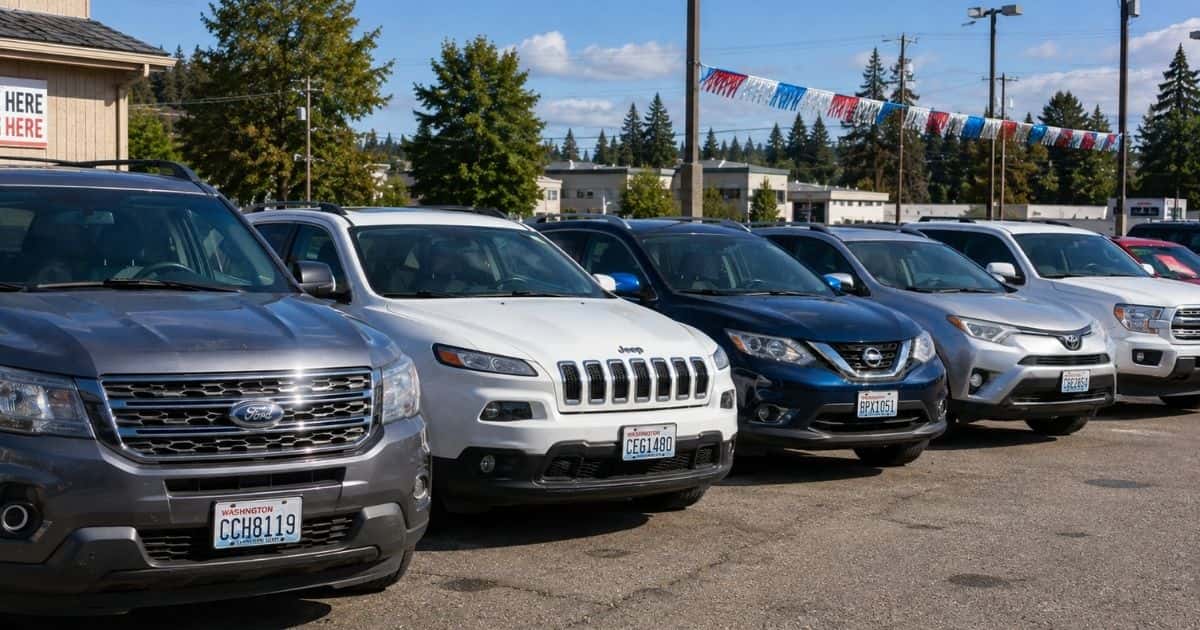
Choosing Between Used Vans and SUVs for Your Auburn Business
The van vs SUV decision comes down to what your business actually does day to day. A contractor hauling tools and materials has very different needs than a sales rep driving to client meetings across Auburn, Kent, and Federal Way. Auburn’s business community spans a broad mix of industries, including aerospace and manufacturing, healthcare, education, retail, and building and contracting work, each with distinct vehicle demands. If your work involves gear, inventory, or bulky materials, a van’s cargo-first design often wins. If you’re moving people, samples, or a mix of both, an SUV’s flexibility might serve you better.
Use this quick checklist to narrow it down:
you haul enclosed equipment or inventory, need Stow ‘n Go-style flexible seating, or run a crew that alternates between people and materials.
you prioritize passenger comfort for clients or staff, need easier maneuvering in tighter lots, or want better everyday fuel efficiency.
your routes mix deliveries and client visits, in which case cargo volume and seating count for your specific vehicle become the deciding factor.
Cargo Space and Passenger Needs: Vans vs. SUVs
The difference between a van and an SUV starts with how each one is built. Vans are designed around maximizing enclosed cargo volume, while SUVs split their design between passenger comfort and storage. That trade-off drives nearly every other decision you’ll make about which body style fits your business.
Cargo Vans and Space for Equipment or Deliveries
Minivans like the Dodge Grand Caravan offer 31.1 cubic feet of space behind the third row, expanding to 78.9 cubic feet behind the second row, and a maximum of 140.3 cubic feet with the front seats as your boundary. The Grand Caravan can also seat up to seven passengers with three-across third-row seating, and its Stow ‘n Go seats fold flat into the floor without needing to be removed entirely.
That’s useful for a business that alternates between hauling a full crew one day and a truckload of supplies the next. Landscaping crews, catering operations, and contractors moving both people and heavy equipment will find that kind of flexibility hard to beat.
SUVs for Balancing Passengers and Storage
SUVs take a different approach, prioritizing passenger comfort while still offering usable cargo room. The Ford Explorer holds 16.3 cubic feet behind the third row, which grows to 46 cubic feet with that row folded and up to 85.8 cubic feet with all rear seats down, while seating six or seven people. The Ford Expedition steps things up with 22.9 cubic feet behind the third row (108.5 cubic feet max), and the Expedition MAX stretches that to roughly 37.4 cubic feet (123.1 cubic feet max).
Smaller crossovers like the Kia Sportage hold up to 74.1 cubic feet with seats folded and use a dual-level cargo floor to organize gear, while the Subaru Forester offers up to 74.4 cubic feet folded, with a boxier shape that makes better use of vertical space than sloped-roof competitors. A mobile service business, home inspector, or sales rep who needs presentable passenger space and moderate cargo room will often find an SUV hits the sweet spot.
Fuel Economy and Daily Route Considerations
Fuel costs add up fast when you’re driving daily routes across the South Sound. Compact vans tend to win on MPG for frequent-stop, urban delivery work, while full-size gas cargo vans realistically land around 14 to 18 MPG combined. Car-based crossover SUVs generally trend toward the more efficient end of the spectrum, making them a reasonable pick for businesses that spend more time on highways between Auburn, Tacoma, and Seattle than making frequent stops.
Route type, payload, and driving conditions influence real-world fuel efficiency more than body style alone, though. A heavily loaded van crawling through Auburn traffic will burn more fuel than the same van cruising a highway route, so think about your actual driving pattern before assuming one body style automatically saves you money.
Branding and Signage Potential
Your work vehicle doubles as a moving billboard, and that’s worth factoring into your decision. A wrapped or lettered vehicle keeps your business name in front of people on every route you drive, and unlike most advertising, you pay for it once and it keeps working for as long as you own the vehicle.
Vans offer larger, flatter panels that make logos, phone numbers, and service descriptions readable from a distance, which suits contractors, delivery businesses, and trades that benefit from broad local visibility.
SUVs carry branding on a more compact, less overtly commercial canvas, which some client-facing businesses actually prefer when they want a professional look without the full fleet-vehicle appearance.
If you’re weighing the cost, a full wrap is a larger upfront expense than simple door lettering or a magnetic sign, but it covers more surface and lasts several years with proper care. Get quotes from a local Auburn or Kent wrap shop for your specific vehicle, since price varies significantly by body style, coverage area, and vinyl quality.
Matching Your Vehicle to Service Routes and Delivery Needs
Think through your typical day before deciding. Plumbers, electricians, and delivery services making frequent stops with heavy loads benefit from a van’s cargo access and load capacity. Businesses navigating tighter urban environments, meeting clients at multiple locations, or needing to park easily in commercial lots around Auburn or Federal Way often find an SUV easier to maneuver. Mapping out your delivery patterns and typical stop count can clarify which body style reduces wasted time and effort on the road.
Insurance and Maintenance Costs for Work Vehicles
Ongoing costs matter just as much as the purchase itself. According to Insureon, small businesses pay an average of $245 per month for commercial auto insurance, though 40% pay less than $200 monthly. Contractors tend to sit toward the higher end of that range, reflecting heavier vehicles, more job-site driving, and higher liability exposure.
Your actual premium depends on the vehicle, your driving record, how many miles you cover, what you haul, and the coverage limits you select, so treat any average as a starting point rather than a quote.
Body style affects the number too. Older vans often cost less for physical damage coverage because their lower cash value reduces the insurer’s payout risk, and widely available replacement parts help keep repair and maintenance costs manageable. Larger or higher-value SUVs can carry higher premiums for the same reason in reverse. Get quotes on both body styles before you commit, since the difference can be meaningful over a few years of ownership.
Budgeting for a Used Work Vehicle in Auburn
A realistic budget accounts for more than the sticker price. Insurance is the recurring cost most business owners underestimate, so use the figures above as your baseline and get a real quote on the specific vehicle you’re considering before you buy.
If you’re running one or two vehicles, a standard commercial auto policy usually works fine. Fleet coverage generally becomes worth pricing out once you’re managing three or more vehicles, since insurers often extend better rates at that point.
Beyond insurance, budget for fuel, routine maintenance, tires, and any signage or wrap investment you plan on. We’d also recommend talking to a tax professional about how a work vehicle purchase factors into your business finances, since deductions and depreciation treatment vary by situation. If you’re watching your upfront budget closely, browsing our vehicles priced under $15,000 can help narrow the search without sacrificing reliability.
Financing Your Work Vehicle with Bad Credit
Credit challenges shouldn’t keep your business from getting the vehicle it needs. Buy here pay here financing, often called BHPH, lets you finance directly through the dealership instead of going through a third-party lender, which can make bad credit auto financing more accessible if your credit history isn’t spotless.
At CarHop of Tacoma, our in-house approach means we look at income and employment history as part of the picture, not just a credit score. We work with buyers who have credit challenges every day, and while we can’t guarantee approval for every applicant, we built our process around giving Auburn business owners a real shot at getting into a reliable vehicle. You can start by checking our fast approval process to see how it works for your situation.
Find Your Next Work Vehicle at CarHop of Tacoma
Auburn has been a working community since 1891, and its location, about 20 minutes from Tacoma and roughly 30 to 45 minutes from Seattle, makes it a natural fit for businesses that need dependable transportation across the South Sound and greater Pacific Northwest. Whether you’re weighing used vans Auburn WA options for hauling equipment or comparing used SUVs Auburn WA models for client-facing work, CarHop of Tacoma has you covered from our Tacoma location and our CarHop of Auburn dealership. Our inventory shifts regularly, so the specific work vehicles Tacoma and Auburn shoppers find will vary, but our commitment to working with buyers facing credit challenges stays consistent.
If you’re ready to find a work vehicle that fits your business and your budget, reach out to our team or stop by one of our South Sound locations to see what’s currently on the lot.
0 comment(s) so far on Used Vans vs. SUVs for Auburn Small Businesses: Compare Models and Financing